

What Is a 4-Point Inspection in Florida?
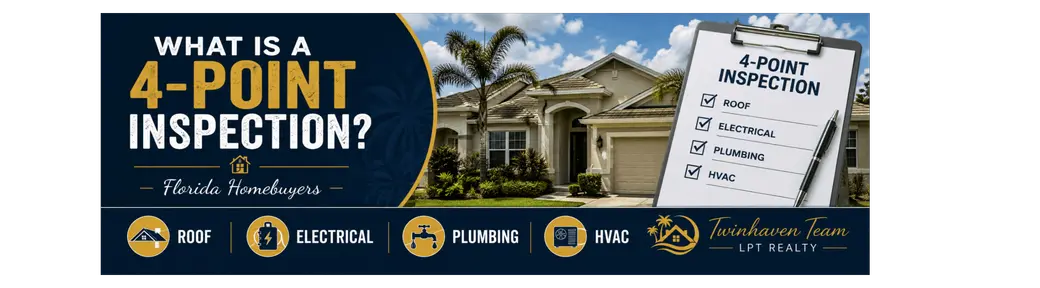
What Is a 4-Point Inspection in Florida?
If you're buying an older home in Florida, there's a pretty good chance the words “4-point inspection” are going to come up.
Despite the name, the inspector isn't checking four random spots around the house and calling it a day.
A 4-point inspection looks at four of the home's major systems:
-
Roof
-
Electrical
-
Plumbing
-
HVAC
The inspection is primarily used by homeowners insurance companies to help them decide whether they'll insure the home and under what conditions.
If you're buying a home, that's something you'll want to know sooner rather than later.
Why Do Florida Insurance Companies Want a 4-Point Inspection?
Florida has plenty of older homes, and insurance companies want to know the condition of some of the expensive systems before agreeing to insure one.
A 4-point inspection gives them a snapshot of those four systems without requiring a full home inspection report.
Depending on the insurance company and the age of the home, they may require one before issuing a policy.
And since you'll generally need homeowners insurance to close on a financed home, this little inspection can suddenly become pretty important.
What Does a 4-Point Inspection Look At?
Roof
The inspector will typically document the roof's:
-
Approximate age
-
Roofing material
-
General condition
-
Signs of leaks or damage
-
Remaining useful life
Roof age can be particularly important in Florida.
A roof can still be keeping the rain out just fine and cause problems with insurance because of its age or condition.
That's why we pay attention to the roof when we're looking at homes—not after you've already fallen in love with the kitchen.
→ How Roof Age Can Affect Homeowners Insurance in Florida
Electrical
The inspector looks at the home's electrical system, including the panel and visible wiring.
Certain older electrical components or wiring types can cause insurance concerns.
Sometimes an issue is relatively simple to correct. Other times it deserves a closer look from a licensed electrician.
Either way, it's better to find out before closing.
Plumbing
The plumbing portion generally looks at the type and condition of the home's visible plumbing system.
The inspector may document:
-
Supply piping
-
Drain lines
-
Water heater
-
Visible leaks
-
Signs of deterioration
Older plumbing materials can sometimes affect insurability even when everything appears to be working normally.
This is another reason the age of a house doesn't tell the whole story.
HVAC
The inspector also looks at the heating and air-conditioning system.
In Florida, the air conditioner isn't exactly a luxury item.
The report typically documents the type, age and general condition of the system and whether permanent heating and cooling are present.
Is a 4-Point Inspection the Same as a Home Inspection?
No.
This is probably the biggest misconception about 4-point inspections.
A 4-point inspection is mainly for insurance purposes.
A full home inspection is for you.
Your home inspector looks much more broadly at the property—structure, appliances, windows, doors, attic, exterior and plenty of other things.
The 4-point report focuses on four systems because those are the systems the insurance company wants information about.
If you're buying a home, don't skip a full home inspection because someone tells you the house already had a 4-point.
They're two different things.
→ What to Expect During a Home Inspection in Florida
Does Every Florida Home Need a 4-Point Inspection?
No.
Whether you'll need one depends on the home and the insurance company.
They're most commonly associated with older homes, but insurance requirements vary between carriers and can change.
That's why I wouldn't rely on a blanket rule like, “Any house over X years old needs one.”
Ask the insurance company.
Even better, start getting insurance quotes while you're still in your inspection period so you have time to deal with surprises.
What Happens If the Home Doesn't Pass?
A 4-point inspection isn't really a traditional pass-or-fail test.
The inspector documents what they find. The insurance company decides whether those findings meet its underwriting requirements.
If something causes a problem, you may have options.
A repair might solve it. An electrician, plumber, roofer or HVAC contractor may need to provide additional information. Another insurance carrier may evaluate the property differently.
What you don't want is to discover the problem the day before closing.
Nobody needs that kind of excitement.
How Much Does a 4-Point Inspection Cost?
Prices vary by inspector and location, and a 4-point inspection is often offered along with other inspections.
Ask your inspector what's included and whether they offer bundled pricing if you're having several inspections performed.
Is a 4-Point Inspection the Same as Wind Mitigation?
No. They're two separate inspections that are often performed at the same time.
A 4-point focuses on the home's roof, electrical, plumbing and HVAC systems. A wind mitigation inspection looks at features related to the home's ability to resist wind damage.
→ What Is a Wind Mitigation Inspection in Florida?
Buying an Older Home in Central Florida?
Older homes can have a lot going for them.
Mature neighborhoods. Bigger lots. Established trees. Different architecture. And sometimes a location you simply can't duplicate with new construction.
They can also come with roofs, electrical panels, plumbing and HVAC systems that deserve a closer look.
That doesn't automatically make an older home a bad buy.
It just means you want to know what you're buying—and what your insurance company thinks about it—before you get to the closing table.
→ Buying your first home? Read our First-Time Homebuyer Guide for Central Florida.
If you're looking at homes in Winter Springs, Oviedo, Seminole County or the surrounding Central Florida area, we're happy to help you sort through the house, the inspection reports and the questions that come with them.
No inspection-report decoder ring required.
Twinhaven Team
LPT Realty
Roger & Aimee Brown
Serving Winter Springs, Seminole County and surrounding Central Florida communities.
689-245-3520
roger@twinhaventeam.com
Categories
Recent Posts









Real estate is personal. We’re here to provide local insight, clear communication, and guidance every step of the way.
GET MORE INFORMATION