

What to Expect During a Home Inspection in Florida
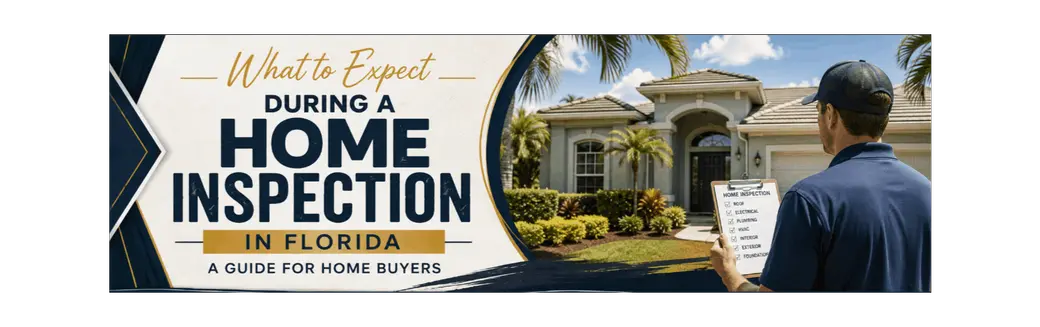
What to Expect During a Home Inspection in Florida
You've found a house. Your offer was accepted. Congratulations.
Now it's time to find out what's actually going on with it.
That's where the home inspection comes in.
A home inspection is your opportunity to have a professional take a much closer look at the property than you probably did during your showing.
And no matter how carefully you looked at the house, I promise the inspector is going to look at things you didn't.
You were probably looking at the kitchen.
They're looking under the sink.
What Does a Home Inspector Actually Do?
A home inspector evaluates the visible and accessible parts of the house and identifies defects, safety concerns and items that may need repair or further evaluation.
A typical inspection may include:
-
Roof
-
Electrical system
-
Plumbing
-
HVAC
-
Attic and insulation
-
Windows and doors
-
Interior walls and ceilings
-
Appliances
-
Exterior
-
Foundation and structural components
-
Garage
-
Water heater
-
Drainage and other visible conditions around the property
The exact scope can vary by inspector and property, so ask what's included when scheduling the inspection.
This isn't an appraisal, and the inspector isn't there to tell you whether you paid too much for the house.
They're there to help you understand what you're buying.
How Long Does a Home Inspection Take?
For a typical single-family home, plan on a few hours.
A smaller or newer home may take less time. A larger or older home—or one with plenty of interesting things for the inspector to investigate—can take longer.
I wouldn't schedule it when you're trying to squeeze it between lunch and another appointment.
Give it some time.
Should You Attend the Home Inspection?
I recommend it when you can.
You don't necessarily need to follow the inspector around for three hours like you're their new apprentice, but being there—especially toward the end—gives you an opportunity to see important findings firsthand and ask questions.
A good inspector can also show you useful things about the house.
Where's the main water shutoff?
Where's the electrical panel?
What does that mystery switch do?
Those aren't particularly exciting questions until you own the house and suddenly need the answers.
What Happens After the Inspection?
After the inspection, you'll receive a written report describing what the inspector found.
Depending on the house, that report might be pretty long.
Don't panic.
Inspection reports often contain photos, maintenance recommendations, minor defects and safety notes along with the more important findings.
A 40-page inspection report does not automatically mean you're buying a disaster.
I've yet to see the perfect house.
The goal is to separate the little stuff from the things that actually deserve your attention.
What Should You Pay the Most Attention To?
A loose doorknob and a roof leak don't belong in the same category.
When reviewing an inspection, I tend to pay particular attention to issues involving:
-
Roof
-
Electrical
-
Plumbing
-
HVAC
-
Structural concerns
-
Water intrusion
-
Safety issues
-
Insurance concerns
-
Expensive repairs that may be approaching
That doesn't mean cosmetic or smaller issues don't matter.
It just means we need some perspective.
If the inspector finds a missing outlet cover, we probably don't need to declare the house structurally unsound.
Can You Ask the Seller to Make Repairs?
Depending on the contract, inspection findings may give you options.
Those options can vary based on the terms of your purchase agreement, which is why the contract matters.
A buyer might request certain repairs, ask for a credit where appropriate, accept the property as-is, obtain additional inspections or estimates, or decide the home isn't the right fit if the contract allows.
This is where having a real estate agent involved becomes especially useful.
The inspection report tells us what the inspector found.
Then we figure out what actually matters and what to do about it.
What If the Inspector Finds Something Serious?
First, don't assume the deal is dead.
Sometimes a scary-looking inspection item turns out to have a relatively simple solution.
Other times it doesn't.
If the inspector identifies something outside their expertise, they may recommend having a specialist evaluate it.
That could mean calling a:
-
Roofer
-
Electrician
-
Plumber
-
HVAC contractor
-
Structural engineer
-
Pool professional
-
Pest or termite inspector
That's normal.
A general home inspector knows a lot about a lot of things, but they're not expected to be a licensed specialist in every trade.
Sometimes the smartest answer an inspector can give you is, “You need someone who specializes in this to take a closer look.”
What About the Roof?
In Florida, we pay particularly close attention to roofs.
Not only can roof problems be expensive, but the age and condition of the roof can affect homeowners insurance.
That means a roof doesn't necessarily have to be actively leaking to become an issue for a buyer.
→ How Roof Age Can Affect Homeowners Insurance in Florida
If the inspector sees something concerning, getting a roofer involved during the inspection period can give you a much better idea of what you're dealing with.
Is a Home Inspection the Same as a 4-Point Inspection?
No.
A full home inspection is primarily for you, the buyer, and looks broadly at the condition of the property.
A 4-point inspection focuses specifically on the roof, electrical, plumbing and HVAC systems and is generally used for homeowners insurance underwriting.
You may end up having both performed during the same visit, but they're separate reports with different purposes.
→ What Is a 4-Point Inspection in Florida?
What About Wind Mitigation?
That's another separate inspection.
A wind mitigation inspection documents certain wind-resistant features of the home that may qualify for homeowners insurance discounts.
You'll often have the home inspection, 4-point and wind mitigation completed during the same appointment.
→ What Is a Wind Mitigation Inspection in Florida?
Are There Other Inspections You Might Need?
Possibly.
Every property is different.
Depending on the home, its location and what the initial inspection reveals, you may want additional inspections or evaluations.
Examples can include:
-
Termite/WDO inspection
-
Sewer or drain-line inspection
-
Pool inspection
-
Septic inspection
-
Well-water testing
-
Mold assessment
-
Structural evaluation
You don't automatically need every inspection somebody has ever invented.
The property usually tells us what deserves a closer look.
Does a Home Inspection Mean Nothing Will Break Later?
Unfortunately, no.
A home inspection is a snapshot of the property's condition at the time of the inspection.
It isn't a warranty.
An air conditioner that works perfectly on Tuesday can still decide it's had enough on Friday.
Welcome to homeownership.
The inspection helps reduce surprises. It can't eliminate every future repair.
What If the House Is New Construction?
Get it inspected.
New doesn't mean perfect.
Homes are built by people, and people occasionally make mistakes.
A third-party inspection can identify incomplete work, installation issues or defects that are much easier to address before closing than after you've moved in.
The fact that nobody has lived in the house yet doesn't mean nobody should inspect it.
Don't Be Afraid of the Inspection Report
This may be the biggest thing I tell buyers.
The inspector's job is to find things.
That's why you hired them.
If you open a long report and immediately start wondering whether you should run away from the house, give it a minute.
We'll go through the findings, figure out what's routine, identify what deserves more attention and decide what makes sense from there.
Some houses have a longer list than others.
What matters is what's on the list.
Buying Your First Home?
If this is your first purchase, the inspection is just one part of the process.
There's also financing, insurance, appraisal, closing costs and a handful of other steps that make a lot more sense once someone explains them without speaking fluent real estate.
→ First-Time Homebuyer Guide for Central Florida
Buying a Home in Central Florida?
Florida homes come with their own set of things to pay attention to.
Roofs matter. Insurance matters. Older electrical and plumbing systems matter. Hurricane protection matters.
Knowing about those things before you own the house is considerably better than learning about them afterward.
If you're buying in Winter Springs, Oviedo, Seminole County or the surrounding Central Florida area, we're happy to help you understand the inspection process, sort through the findings and figure out what deserves your attention.
The goal isn't to find a house with absolutely nothing wrong with it.
We'd probably be looking for a while.
The goal is to know what you're buying.
Twinhaven Team
LPT Realty
Roger & Aimee Brown
Serving Winter Springs, Seminole County and surrounding Central Florida communities.
689-245-3520
roger@twinhaventeam.com
Categories
Recent Posts











Real estate is personal. We’re here to provide local insight, clear communication, and guidance every step of the way.
GET MORE INFORMATION